Jack and I fished the trico hatch on the lower Bitterroot on September 11. Here are a few of my favorites and at the bottom of the post is a slideshow of the day.
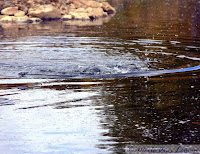
Here is a slideshow of photos tricos as we approached this “cloud.”
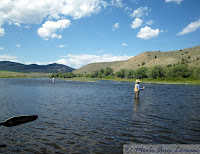
Photos taken from Angler’s Roost to Main Street Bridge in Hamilton. The Darby USGS water flow gauge reported 1900 CFS on this day. Clarity was good, caddis hatches prolific but not many feeding trout. Gorgeous day, though.
This is the first article in a pair about fly fishing the trico hatch in western Montana. The second is about six tips to improve your success.
Within the fishing season there are times that one really anticipates. For many in western Montana, it is the Skwalla or salmon fly hatches early in the year. These two stonefly hatches are famous for bringing up big fish and they both come at times when you are anxious to fish — spring before high water and right at receding high water. But another hatch later in the year will get trout feeding on top on a consistent daily basis.
The trico mayfly hatch produces spinner falls where trout jam for 2-3 hours in the morning. And, because the trico hatch lasts so many weeks, mid-August through September, one has to devise a strategy to deal with this important time. No other mayfly species is so intense.
The reasons so many surface feeding trout can be found gulping tricos have to do with the slight decrease in the water temperatures of a late summer morning and the hundreds of mayflies on the water. It is a signal to the trout that fall is coming and winter is just around the corner. “We need to stock up,” they are saying. The joy is seeing all these targets. But, despite the sheer number of tricos dancing in the air, loads of spinner falls on the water, and the active pods of sipping trout, the trout can be very difficult to catch during this hatch. The water is flat, the sun bright, and trout see so many naturals. How do you get them to take your imitation? This can be agonizing.
Typically, western Montana’s trout fly fishing and guiding season lasts from mid-March through mid-October making trico season a very significant part. Jack Mauer of Wapiti Waters shares a few tidbits of information and wisdom that he has gained over 25 years of guiding fly fishermen and hopefully it will improve your catch rate. No doubt about it, targeting trout that are coming to the surface and feeding on these tiny aquatic insects requires a little different skill set. The best spinner falls are on partly sunny days. When the light reflects off the water and through the tippet, it will shine like a diamond necklace and alert the fish to you and your dry fly.
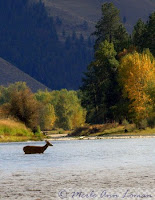
Classic trico water on in western Montana
Photo by Merle Ann Loman
You can be doing everything right, make good presentation, hook a beautiful fish with a nice slow hook set, play him for one long run and then have him shake the hook or break off in a weed bed. This is where the joy can turn to agony. But therein lies the challenge of what trout fishing is all about.
This is some of the toughest, most technical angling that one encounters during the season, but it also is some of the most gratifying. A morning of trico fishing is something Jack really looks forward to every year because of the challenges and rewards of catching trout during this time. To reap the rewards yourself read the second article discussing the six “P”s to better success in trico fishing. The six “P”s are patterns, precision of presentation, patience, persistence, practice, and pulse. Here is a link to Jack’s Six “P”s of trico fishing.
“When is the best time to fish western Montana?” This is the question I am most often asked. In my attempt to answer it, I will take a brief look at our seasons chronologically and try to highlight a few of the more memorable fishing moments in an ‘average’ year.
Naturally we will begin with spring. Fish are coming out of a dormant period by mid-March with milder weather and water temperatures. Spring with its predictably unpredictable weather does have its special moments. The Bitterroot, Big Hole, Blackfoot, Clark Fork and Missouri will ‘come in’ at different times from mid-March through May. Naturally extreme weather (too cold OR too warm) can ruin the angling, yet spring has some wonderful hatches. You will see stoneflies; Skwalla and Nemoura, mayflies; March Brown and Blue-winged Olives (BWO), and lastly caddis that can trigger some unbelievable opportunities. Fishing “underneath” with either nymphs or streamers can also be very productive. One must be somewhat of a gambler to fish in the spring. The rewards can be gratifying for the lucky angler who strikes it rich.
Starting in mid-May, rivers will begin to surge as warm, mild weather begins melting the snowpack. A typical run-off will last over a period of about 5 weeks or so depending on the amount of snowpack. However, the craziest streamer and nymph fishing ever has happened between run-off pulses during this time period.
Early summer is probably the most popular time to fish western Montana, right after main run-off events are over, typically around mid-June, river flows decrease and gain clarity. Hatches of salmonflies, golden stones and green drake mayflies make their annual appearance. This can be an especially productive time for the inexperienced angler as trout are hungry, relatively uneducated, and the water is fast and forgiving. One can get away with a little more drag on the surface fly and use heavier tippets and larger patterns. For many of my fisherman, the last 10 days of June and first 10 days of July are the best time to fish. It is difficult to argue as the good hatches, healthy river flows and early summer weather are hard to beat. It is also the time of year that most people are recreating on our area rivers and is to be expected. Wapiti Waters does its best to avoid getting into a crowded fishing scene and having to “compete.”
Eventually the fishing settles down into mid-summer rhythm, always dependent on weather, the explosive hatches of larger insect species is over and too many days of hot weather really slows down the trout. Mid-summer slides into the so-called ‘dog days’ with morning PMDs spinner falls and the Isoperlid Stoneflies like yellow sallies are about the only aquatic insects out there. However there have been memorable moments in certain river reaches with terrestrial patterns like beetles, ants, grasshoppers and moths. This time period (mid-July through mid-August) is an excellent time to be on the water particularly for the early riser as the morning fishing can be very good. Many Wapiti waters customers prefer this time as area rivers have noticeably less fishing pressure.
At the end of August, longer nights and cooler weather turn on the bugs and the trout. The tiny black curse (trico mayfly) begins to make its appearance and cloud up the morning sky with its mating dance. Once on the water these little bugs give anglers the most challenging as well as rewarding fishing opportunities of the year. The patterns are small; one’s casting must be accurate and soft and hooks sets slow. In other words good technique is usually required. But because the opportunities for finding rising trout are numerous, you can get a lot of practice refining your technique. After a morning of trico fishing, an afternoon of hopper and/or fall drakes is likely to follow. For many dry fly purist, this time period is best as fish can be found rising throughout the day.
Later in September, the above mentioned hatches are followed by BW and mahogany dun mayflies, October caddis and midge swarms that take us right into late-fall. During our fall fishing one can expect to find pretty consistent hatches, sipping trout and fall colors that make this my personal favorite time to fish. This is a quality time particularly for the late riser as afternoon fishing is the norm.
We hope this answers the question about the best time to fish. I don’t like to promise good fishing just because you’re booked, say the first week of July or early September. So much of the fishing depends upon factors we have no control over such as weather and stream flows …but when the fishing is just tough we will always go back to the Robert Traver quote, “I fish because I love to; Because I love the environs where trout are found…” See the entire quote below and Thank you for reading this article.
No matter what time of year, Wapiti Waters always works hard to find your best fishing.
THE TESTAMENT OF A FISHERMAN
Robert Traver 1964, (Judge John Voelker 1903-93)
I fish because I love to;
Because I love the environs where trout are found, which are invariably beautiful, and hate the environs where crowds of people are found, which are invariably ugly;
Because of all the television commercials, cocktail parties, and assorted social posturing I thus escape;
Because, in a world where most men seem to spend their lives doing things they hate, my fishing is at once an endless source of delight and an act of small rebellion;
Because trout do not lie or cheat and cannot be bought or bribed or impressed by power, but respond only to quietude and humility and endless patience;
Because I suspect that men are going along this way for the last time, and I for one don’t want to waste the trip; because mercifully there are no telephones on trout waters;
Because only in the woods can I find solitude without loneliness;
Because bourbon out of an old tin cup always tastes better out there;
Because maybe one day I will catch a mermaid;
And, finally, not because I regard fishing as being so terribly important but because I suspect that so many of the other concerns of men are equally unimportant – and not nearly so much fun.
See photos from early spring through late fall in the slideshow below.
View AlbumClick view album to see in new larger window, choose “slideshow” for full screen mode.
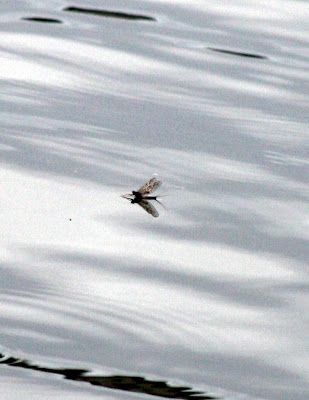
I forgot to mention in the earlier blog that we were fishing with Jack’s dry imitations of skwala and mayflies. These photos show why. We saw them on the water. The first is a photo of an Ameletus mayfly dun. It is beautiful in it’s grey color and upright profile.
The second photo is, of course, a female skwala on my wader pant leg. She stayed with us in the boat for most of the trip.
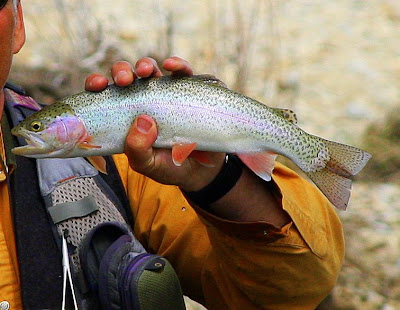
Below is a fish Jack caught while wade fishing during a mayfly hatch. I can’t tell you what fly he was using, it is too obvious.
When you fish the hatch, you will have to match the size.
Jack also caught the brown trout in an earlier post during this hatch. AND with my camera around my neck, I caught one of the biggest fish, another brown trout, right at the end of the hatch. Now that I am learning to set my hook better, it is getting a lot more fun!


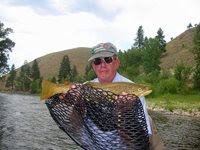




 Jack also caught the brown trout in an earlier post during this hatch. AND with my camera around my neck, I caught one of the biggest fish, another brown trout, right at the end of the hatch. Now that I am learning to set my hook better, it is getting a lot more fun!