Wapiti Waters 2010 fishing forecast for western Montana

Wapiti Waters 2010 fishing forecast for western Montana

Wapiti Waters’ 2010 fishing season forecast based on over 30 years experience in western Montana’s trout fisheries.

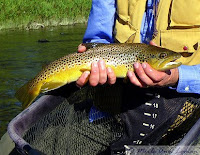
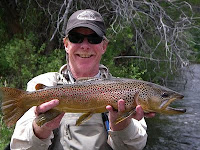
Jamie and his Bitteroot trout


Jack Mauer, Wapiti Waters outfitter and guide

I have just read they will be shipping snow by truck to the site of the 2010 Olympic Games – Cyprus Mountain. Mother Nature has not cooperated but they have had time to prepare for the lack of snow. Likewise, here in the fishing business where a trout fishery depends a lot on good, cold stream flows, we have time to prepare or plan for what looks to be a lean water year.

I hate drought, everybody and everything suffers during times of water stress. Unfortunately conditions are looking more and more like drought as snowpack in the Bitterroot is around 54% of normal at the time of this writing. We have had three months of below average snow precipitation and we have less than two months of winter to go. So the prognosis is not good. What this actually means for the fishing, however, is not all gloom and doom.

Here are my predictions for the 2010 season.

Insect hatch on the Bitterroot in spring

Insect hatch on the Bitterroot in the spring.
Photo by Merle Ann Loman

March and April – Early Spring fishing

Expect fishable water through-out this time. Because our low elevation snow is meager, we should have better than average fishing with more fishable days. It is the melting low elevation snow that causes the rivers to pulse up too quickly with warm weather and/or rain. So I predict excellent early spring fishing in western Montana and that means Skwala and nemoura stones as well as Ameletus and Rithrogenia mayflies.

May and June – Usual period of high-water conditions

Again, I expect better than average fishing for these two months. Many hatches such as the salmonfly; pteronarcella, larger stoneflies; March Brown; and Hydropsyche caddis will come off in good numbers during this time and have the trout looking up on a more consistent basis. Pulsing high waters in the average snowpack year don’t give the trout a chance to key on these hatches before water levels may become too big. This year under the possible lower than average flows, it is likely that trout will get a chance to really key in on them. As a result, these conditions may bring some remarkable fishing.

No matter how big or small the snowpack there will be a time of peak run-off for a 2-3 week period. When this happens, most area rivers will probably be unfishable because of high, turbid water. Here is where flexibility becomes important. Some rivers will likely be fishable and changing the location/river will allow you to take advantage of good conditions. Wapiti Waters has the knowledge and permits that can put you on the right water.


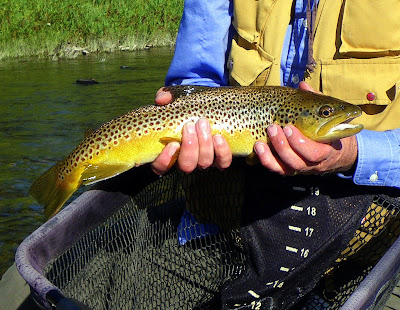
David with a Bitterroot brown trout
Wapiti Waters photo

July and August – Summer fishing

Early July is usually a time of some of the most consistent fishing. I expect that to be the case given the number and variety of aquatic insects that emerge during this time. However, by mid-July the prognosis is not good. Using a preferred strategy for low, warm water conditions in mid-summer, we will need to fish from early morning to early afternoon. Fishing early is in favor the trout and yourself – beating the heat. It is quite possible that rivers like the Blackfoot and the Big Hole will have some angling restrictions during this time.

September and October – Fall Fishing

It is a little too early to predict eight months in advance. Our fall fishing is usually a fly fishers dream here in western Montana. Low flows in the summer are not the single deciding factor of unfavorable fall fishing conditions. For example, last year we had a huge snowpack but we had very tough fall fishing because of unseasonably warm temperatures and bright, sunny weather.

In the mean time, I hope the weather systems in the Pacific will deliver us some welcome precipitation through-out the year.

For more info: Wapiti Waters welcomes calls and emails for up-dated conditions and angling reports.

Contact information: Toll free 800-254-5311, email wapiti@wapiti-waters.com, website www.wapiti-waters.com.

The western Montana rivers Jack fishes most are the Bitterroot, Blackfoot, Big Hole and Clark Fork rivers. See links to more articles and information below.
  • Fishing and river articles and photos by Merle Ann Loman by key word:

Bitterroot River | Big Hole River | Blackfoot River | Clark Fork River | Missouri River | Argentina

Native fish restoration in Montana – Bitterroot Trout Unlimited public program 1-21-2010

Native fish restoration in Montana – Bitterroot Trout Unlimited public program 1-21-2010

The January BRTU meeting will be at 7:00 PM Thursday, January 21 at the Hamilton Elks Lodge, 203 State Street. Travis Horton, who is the Native Fish Coordinator for Montana Fish, Wildlife and Parks, will give a presentation about Montana’s Native Trout programs. This will be a great opportunity to learn about what makes Montana’s fisheries so special. Attached is the postcard that is being mailed out. Please feel free to forward on to interested friends. If you have any questions, please contact Bill Bean at 363-6158, Fishaus@blackfoot.net

Link to programs offered by Bitterrroot TU

Elks Lodge

maps.google.com

203 State Street
Hamilton, MT 59840-2522
(406) 363-3031
Get directions

Fall means brilliant colors and brown trout are spawning

Fall means brilliant colors and brown trout are spawning

It is fall in Montana and great fishing, but watch out for redds. Brown trout are spawning.

Brown trout from the Bitterroot in the spring

Fall brings cooler temperatures that cue brilliant foliage, migrating geese and spawning brown trout.

Brown Trout (Salmo trutta) is an exotic species in Montana. It was introduced to North America and Montana in the late 1800’s. Brown trout belong to a different genus than our native trout species. Widely stocked early in this century, they are currently doing well as a self-sustaining population.

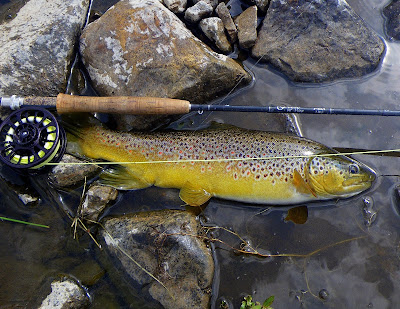
The brown trout are golden brown with spots, lots of spots. They have black spots that may be irregular, and often red and orange spots. A distinct characteristic is spots with halos on the gill covers. Their tails are short and square. They commonly grow to 12 to 20 inches, but Montana’s state record is 29 pounds.

Brown trout feed largely on underwater aquatic insects.
And, as a predaceous fish, more so than rainbow or cutthroat, the larger browns often feed at night on other fish, crayfish and other invertebrates. Brown trout have a few advantages over native Montana trout species. Brown trout are better adapted to disturbed habitats, and can live in areas that experience unnatural changes in water level, temperature, and water quality.

Jeff's Brown trout on the Bitterroot River
Brown trout caught by Jeff

Brown trout also lay their eggs in the fall, getting a jump on the native species which spawn in the spring making them subject to irrigation seasons water fluctuations among other things. Spawning occurs for brown trout when water temperatures drop to about 40 degrees F. and lasts usually from October through December in Montana. Female brown trout make redds in gravel or small pebbles in shallow water, usually less than a foot deep. Females deposit the eggs, males fertilize the eggs and they are covered with very small gravel or silt. In the spring, about 50 days later and at 50 degrees F, the surviving eggs hatch.

Some brown trout spawn on their resident rivers, but to find the right (very specific) conditions most migrate, sometimes traveling great distances upriver or into tributaries. During this critical time for brown trout, if you are aware of spawning beds where you are fishing, it is preferable not to disturb them.

Here are some things to think about when fishing during the spawning period:

  • Stay away from the redds, do not walk in them. In general, they will be in clean gravel and it will look like someone dug a hole in the smaller gravel.
  • Fish downstream to the probable pods of trout below the redd, not IN the redd. A clue is fish sitting on top of thecleared off gravel in pairs.
  • If you catch a spawning trout, try not to sap their strength; play them quickly, release them quickly and of course, handle them gently.
  • Last, target fewer fish. Catch a few, and then move on to another area.

Brown trout are usually in the larger, slower and lower gradient streams often where there are logs and other structure available to hide under. They also do well in reservoirs.

Brown trout are a popular game fish and a challenge to catch because they are selective and wary. When an angler catches them, it is exciting as they can be large and put up a good fight, running with the line.

For more info:
Montana Fish, Wildlife and ParksField guide for brown trout

Montana University System Water Center – Brown trout information

Utah on the Fly Article – The Bedroom of the Browns: Acting Responsibly During the Spawning Season, by Jim McGeever

Merle’s SmugMug photo site – Many more brown trout photos in their original format

<

Jack’s Fly Fishing Day on the Big Hole

Jack’s Fly Fishing Day on the Big Hole

Big Hole Trout
Jack had a travel day home and decided to wade fish the Big Hole on his way. Here are a couple of the fish he caught on his Scott rod. You can visit the Scott website at http://www.scottflyrod.com/.

Here is more contact information:

Email: info@scottflyrod.com

The Scott Fly Rod Company
2355 Air Park Way
Montrose, CO 81401

phone:
toll free (800) 728-7208

fax:
(970) 249-4172

Follow

Get every new post delivered to your Inbox

Join other followers: