by Merle Ann Loman | Apr 14, 2009 | Bitterroot, i Spring
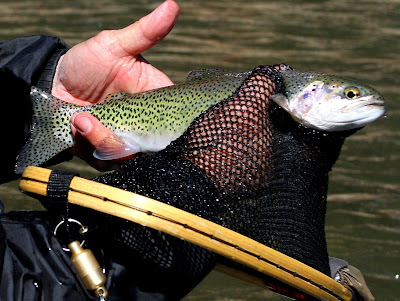
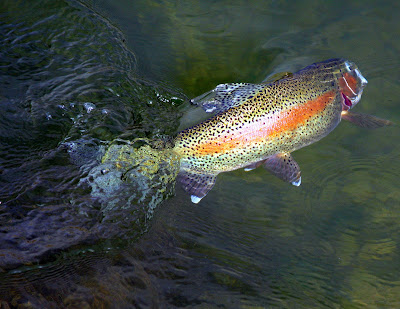
I am editing some skwala photos, but wanted to post a few photos from our fishing on Sunday. It was surprisingly good. More photos, including skwala, will be in the next post.
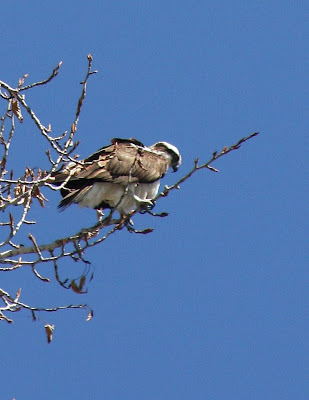
To throw in some drama, I will post a photo of geese flying over and an osprey on that same stretch of the Bitterroot River.
by Merle Ann Loman | Apr 7, 2009 | Bitterroot, i Spring
Well, we are having spring weather!
Two days ago it was freezing, now our lows are 36 degrees and our high for today is forecasted at 68 degrees. Currently, in the late morning it is about 50 degrees.
Warm weather will bring the bugs but it will bring down the snowpack, too. The upper river has come up close to 200 cubic feet per second (CFS) in the last two days. If we can have cool nights as forecasted, we will have an orderly, slower rise in CFS and better chances of great fishing.
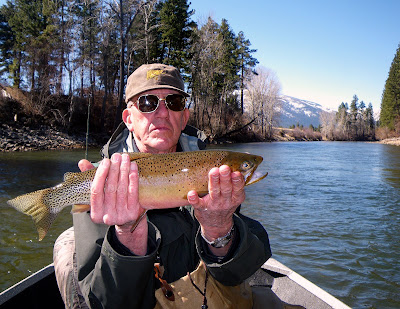
Nice photo of John. Yes, he is always this happy!
Click http://www.wapiti-waters.com/stream.htm to see links to weather in the Bitterroot, USGS water data sites, and snowpack information.
by Merle Ann Loman | Apr 5, 2009 | Bitterroot, i Spring
No doubt the snowpack that has been laid down since the first day of spring will be welcome in late July. Right now, however, it’s definitely caused a few cancellations as some of our anglers think it’s too cold to fish. It is hard to argue with that. For sure these are some of the coldest water temperatures we have ever guided on! Yet, there has been good fishing without a lot of bugs yet.
No, we have not resorted to the use of indicators and nymphs…PLEASE! Spring angling is about finding a few fish “looking up.” It is about getting the rust out of your cast; reminding yourself that sometimes you need to mend downstream, not only upstream, in order to get the extended drift; and it is about making a slow, firm hook-set when a fish does happen to inhale your dry fly. You had better have just enough line slack to drift your bug just right but not too much line slack reducing your control and reaction time. Early spring fishing is about the joy of casting a single, buoyant big stonefly dry or mayfly pattern and observing the sights and sounds around you, the life that is teeming on the river and banks. So for me, it is not about hooking a bunch of whitefish or watching a bobber all day long… this is my philosophy. 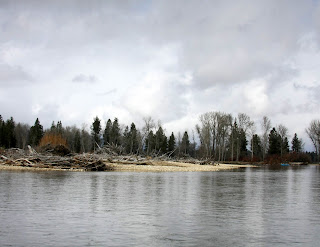
Yes, there are those that want to fish with droppers off of large dries or indicators in nymph rigs. Many anglers coming from a tail-water expect their guides to produce lots of fish and have lots of action. So be it. I do respect their right to lose as many flies as possible on all the woody debris that is found on the Bitterroot River. With that said, yesterday was the first bright sunny day in three weeks after clouds and snow, and it fished tough. We found big fish tight to some cover and a few out in the open lanes. It turned into a good day despite the conditions.
by Merle Ann Loman | Apr 4, 2009 | Bitterroot, i Spring
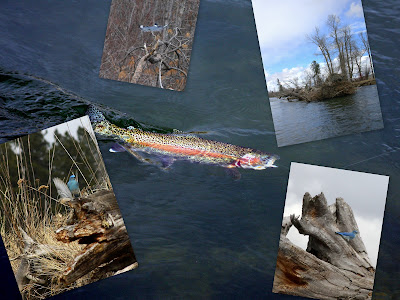
Jack has been guiding a lot recently, but the clients for today decided it was too cold for them. It was a cool morning but about noon we decided we would do a short float together and scout a middle stretch of the river for water level, woody debris and shifting gravel/sand bars. There weren’t many bugs yet the trout came up to our dry flies. It turned out to be a productive and beautiful day, though we did encounter some squalls with rain and wind. I forgot a warm hat so by the time we took-out, around 5:15, I was ready to get warm in the truck.
Check out the slideshow below for more river photos including some birds and fish.
by Merle Ann Loman | Mar 29, 2009 | Bitterroot, i Spring
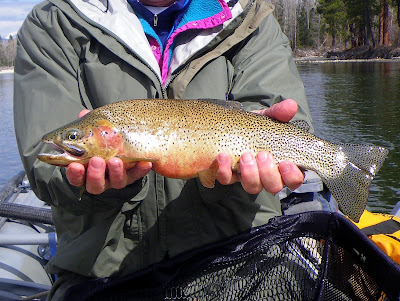
Dusty Bernard organizes a spring fishing trip to the Bitterroot. They stay at the Bitterroot River Lodge and fish with Wapiti Waters.
This year was the coldest weather they had fished in and Jack said it was the coldest water temperatures he had ever guided on. There was ice everywhere but the trout, including the Bitterroot native cutthroat you see Dusty holding, still came up to their dry flies. For this fish, Dusty used one of Banjo Jack’s Skwalla Dry Flies.
For more photos see the slideshow below. Hopefully, Dusty and others will send us some of the photos from their cameras. When they do, I will update the slideshow. Check back in a few days.
Choose View Album to see the photos in a new, larger window, then choose the slideshow option to view in full screen mode.